
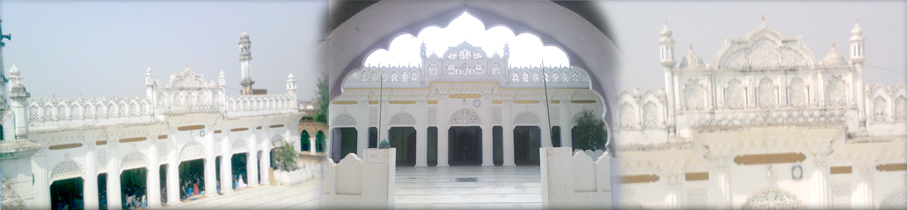
Panoramic view of Siraj-ul-Uloom

Our story

Built to illuminate.

A historic institution shaped by Sambhal’s scholarly tradition and sustained by a continuing commitment to education, character and public service.

A place of enduring learning

More than a century in the service of knowledge.

Siraj-ul-Uloom is among Sambhal’s historic centres of Arabic and Islamic education.

The institution’s roots are associated with the teaching legacy of Abu Ishaque Abul Aja'ib Shah Muhammad Hilali. In 1902, Shamsul Ulama Hazrat Maulana Khaleel Ahmad Israili formally established the madrasa, giving lasting form to a tradition of scholarship in Hilali Sarai.

Its purpose has remained clear: to make Islamic knowledge accessible, to develop sound understanding and ethical judgment, and to prepare students to serve their communities with humility and wisdom.

Scholarship and formation

Study at Siraj-ul-Uloom includes Arabic language, Tafseer, Hadith, Fiqh, Qur'an memorisation and foundational education. Learning is understood not only as the acquisition of information, but as the formation of character, responsibility and service.

Purpose in practice

A mission wider than the classroom.

The madrasa’s educational work has historically been accompanied by religious guidance, community cooperation and care for people in need.

Education

Teach with depth

Provide careful instruction in Qur'an, Arabic and Islamic sciences through structured stages of learning.

Character

Form with purpose

Develop ethical judgment, discipline and a sense of responsibility alongside academic progress.

Service

Strengthen community

Offer religious guidance, welfare support and constructive cooperation for social harmony.

Learning expressed through service.

  • Dar-ul-Ifta: religious guidance for questions of faith and practice.
  • Tanzeem Islahe Bahmi-o-Qayam-e-Amn: community cooperation, reform and peace-building.
  • Al Islam Trust: support for people in need, including poor families and widows.
  • Educational continuity: pathways intended to help students proceed to further Islamic and Arabic study.

See how the tradition is carried forward.

Explore the madrasa’s departments, study stages and curriculum.

Explore academics